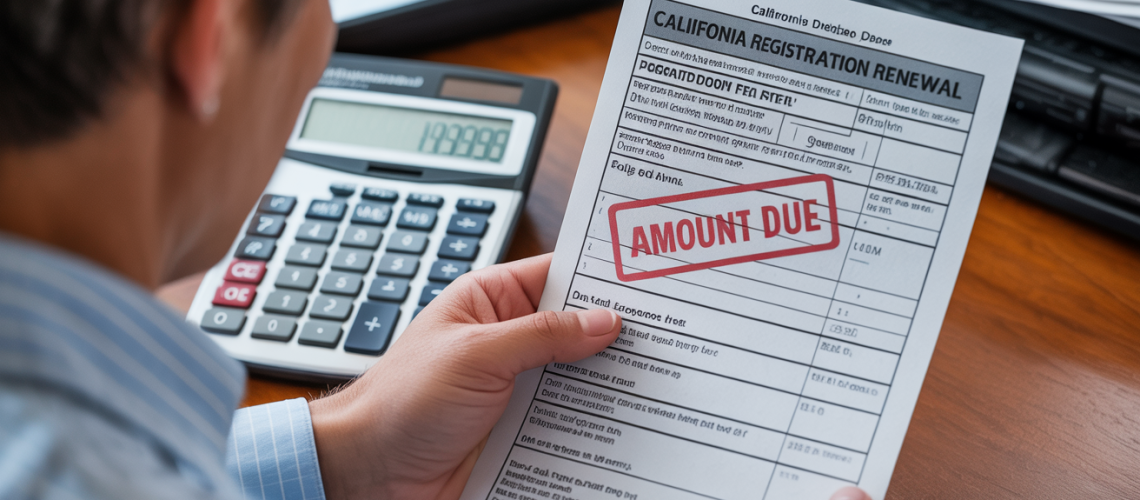
If you recently opened your 2026 vehicle registration renewal notice and did a double-take at the amount due, you’re not alone. Thousands of California drivers are reporting sticker shock as their registration fees have increased—sometimes by $50, $100, or even more compared to what they paid last year. Social media is buzzing with frustrated posts about “mystery fees” and unexpected charges, leaving many wondering if there’s been a mistake.
The reality is more nuanced: California’s 2026 registration fees reflect a combination of updated vehicle valuations, new statewide environmental surcharges, and expanded local transportation fees that many counties have recently implemented or increased. While some of these changes were authorized by legislation passed years ago, they’re only now showing up on renewal notices in full force.
At Quick Auto Tags, we’ve been fielding questions from confused customers all month. The good news? Once you understand how your registration bill is calculated and what each line item represents, you can verify whether your amount is correct—and catch any errors before they snowball into late fees or registration suspensions.
This guide breaks down exactly what changed in 2026, how to read your renewal notice line by line, and when it makes sense to have a professional review your bill before you pay.
What Actually Changed for 2026 California Vehicle Registration Fees?
California registration fees aren’t just one flat rate—they’re a collection of separate charges that add up to your total amount due. Several of these components changed for 2026, and when combined, they can create a noticeable jump from previous years.
Updated Vehicle License Fee (VLF) Calculations
The Vehicle License Fee is one of the largest components of your registration bill, calculated as a percentage of your vehicle’s depreciated value. The California Department of Motor Vehicles updates its vehicle valuation tables annually based on market data, and 2026 valuations reflect stronger used car prices than the DMV anticipated in previous years.
For many vehicles—especially popular SUVs, trucks, and electric vehicles that held their value well through 2024 and 2025—this means a higher assessed value and therefore a higher VLF. Even though your vehicle is one year older, if its market value hasn’t dropped as much as the DMV’s depreciation schedule typically assumes, you’ll pay more.
Example: A 2019 Honda CR-V that was assessed at $18,000 for your 2025 renewal might be valued at $17,200 for 2026—a smaller drop than the usual 10-12% annual depreciation. That difference translates to roughly $16 more in VLF alone.
New and Expanded Environmental and “Clean Vehicle” Fees
California introduced several new environmental surcharges and increased existing ones as part of its commitment to reducing vehicle emissions and funding clean air initiatives. According to the California DMV’s 2026 law highlights, these changes include:
Zero-Emission Vehicle (ZEV) Registration Fee: Starting in 2026, electric vehicle owners pay an annual $100 ZEV fee to help offset the gas tax revenue these vehicles don’t generate (since they don’t use gasoline). This fee funds road maintenance and was authorized by prior legislation but only began appearing on renewals this year.
Air Quality Improvement Fees: Several counties have implemented or increased local air quality surcharges, typically ranging from $5 to $25 depending on your ZIP code. These funds support smog abatement programs and emissions testing infrastructure.
Enhanced Smog Abatement Fee: The statewide smog abatement fee increased by $1-$2 for most gasoline vehicles in 2026, a small bump that reflects inflation adjustments.
These environmental fees are legally mandated and cannot be waived, but understanding where they come from helps explain the increase.
Local Transportation Improvement Fees Are Expanding
One of the biggest surprises for 2026 renewals is the proliferation of county-level transportation fees. Many California counties—particularly in urban areas like Los Angeles, Orange, Riverside, San Bernardino, and the Bay Area—have passed measures that allow them to levy additional registration fees to fund local road repairs, transit projects, and congestion relief.
These fees vary dramatically by county:
- Los Angeles County: Vehicles registered in LA County pay an additional $25-$45 depending on their ZIP code, funding Metro transit expansion and freeway improvements.
- Riverside County: Certain areas now see a $15-$20 regional transportation fee.
- San Francisco/Bay Area Counties: Some ZIP codes have fees exceeding $40 for local transit initiatives.
- San Diego County: The SANDAG TransNet fee adds roughly $12-$18 to most registrations.
Important: These fees are tied to your vehicle’s registered address, not where you purchased it or where you currently live. If you moved to a new county in 2025 but haven’t updated your address with the DMV, you might still be paying the old county’s fee structure—or you might owe back fees once you update your records.
California Highway Patrol (CHP) Fee Adjustment
The CHP fee, which funds highway patrol operations, increased by approximately $2-$5 for most vehicle classes in 2026. This is a standard adjustment that happens periodically, but when combined with other increases, it contributes to the higher total.
Commercial and Heavy Vehicle Changes
If you own a commercial vehicle, pickup truck over 6,000 lbs, or any vehicle requiring a commercial weight certificate, additional fees and higher base rates took effect in 2026. Fleet owners and businesses should pay special attention to these changes, as they can significantly impact multiple vehicles.
How to Read Your 2026 Renewal Notice: A Line-by-Line Guide
Understanding your renewal notice is the first step toward verifying you’re being charged correctly. Here’s what each section typically includes and what to watch for.
Section 1: Vehicle Information
At the top of your notice, verify:
- Make, model, and year are correct
- VIN (Vehicle Identification Number) matches your vehicle
- Registered address is current (critical for determining county fees)
- Body type and fuel type are accurate (errors here can trigger wrong fees)
Red flag: If your electric vehicle is listed as gasoline-powered, or vice versa, you could be charged incorrect fees. Similarly, if your ZIP code is wrong, you might pay the wrong county’s transportation surcharge.
Section 2: Base Registration Fee
This is your standard California registration fee, which in 2026 ranges from:
- $64 for most passenger vehicles
- $74-$104 for larger vehicles, RVs, or commercial vehicles
- Additional weight fees for trucks over 10,000 lbs
Section 3: Vehicle License Fee (VLF)
This is calculated as 0.65% of your vehicle’s assessed value after depreciation. The DMV uses a published depreciation schedule, but recent market conditions mean vehicles are depreciating more slowly than in past years.
To estimate what your VLF should be:
- Find your vehicle’s fair market value (check resources like Kelley Blue Book or NADA Guides)
- Apply California’s depreciation schedule (roughly 10% per year, but varies by age)
- Multiply by 0.0065
Example calculation:
- 2021 Toyota Camry
- Original MSRP: $28,000
- Estimated 2026 value after depreciation: $20,000
- VLF: $20,000 × 0.0065 = $130
If your notice shows significantly more or less than this, it’s worth investigating.
Section 4: County/Regional Transportation Fees
Look for line items labeled:
- “Local Transportation Fee”
- “Regional Measure”
- “County Transportation Surcharge”
- “[County Name] Transit Fee”
What to check: Does this fee match what your county is authorized to charge? You can verify county fees on the official California DMV website or by checking your county’s transportation authority website.
Common mistake: You moved counties but the DMV is still charging you based on your old address. This requires an address change to be filed first, then a corrected renewal notice.
Section 5: Environmental and Program Fees
These typically include:
- Smog Abatement Fee: $25 for most gasoline vehicles
- ZEV Fee: $100 for electric vehicles (new in 2026)
- Air Quality Improvement Fee: $6-$25 depending on county
- Alternative Fuel Fee: Varies by vehicle type
Section 6: California Highway Patrol (CHP) Fee
Standard for all vehicles, typically:
- $27-$32 for passenger vehicles
- Higher for commercial/heavy vehicles
Section 7: Other Fees (If Applicable)
Depending on your vehicle and situation, you may see:
- Smog certification fee: $8.25 (if due for inspection)
- Late fees: $10-$30 if you missed your renewal date
- Penalty fees: If your registration was previously suspended
- Special plate fees: Personalized, veteran, or custom plates
When to Double-Check or Get a Professional Review
Not every increase is an error, but certain scenarios warrant a closer look at your renewal notice:
Your Vehicle Should Qualify for an Exemption
Some vehicles are exempt from certain fees:
- Electric vehicles manufactured before a certain date may be exempt from the ZEV fee for their first few years
- Hybrid vehicles shouldn’t be charged both gasoline and ZEV fees
- Classic vehicles (25+ years old) may qualify for reduced fees in some counties
- Low-income assistance programs can reduce fees in specific circumstances
If you believe your vehicle qualifies for an exemption but you’re still being charged, it’s worth investigating before you pay.
You Recently Purchased the Vehicle
If you bought your car within the last year:
- Verify the purchase price and sale date are reflected correctly
- Check that any trade-in credit was applied to your VLF calculation
- Ensure title transfer was completed properly, as errors during the transfer process can lead to incorrect valuations
- Confirm the vehicle’s history (salvage, rebuilt, flood damage) is accurately recorded, as these factors affect valuation
Your Address Changed
Moving to a different county—or even just to a different ZIP code within the same county—can dramatically change your registration fees due to local transportation surcharges. If you moved but haven’t updated your address, or if the DMV has the wrong address on file:
- You could be paying a higher (or lower) county fee than you should
- Your renewal might be going to the wrong address, causing you to miss deadlines
- Future issues could arise if your registration doesn’t match where you actually live
Filing an address change is straightforward, but it needs to be done before your renewal processes to ensure correct fees.
The Increase Seems Disproportionate
If your 2026 registration is $150+ higher than 2025 for the same vehicle with no address change, or if specific line items seem incorrect:
- The DMV’s valuation table might have an error for your make/model/year
- Your vehicle might be misclassified (commercial vs. passenger, diesel vs. gasoline)
- There could be a duplicate charge or an incorrect penalty from a prior year
- Outstanding parking tickets or suspended registration issues might be included
Why Errors Happen and What You Should Do
California processes millions of vehicle registrations annually, and while the system is generally accurate, mistakes do occur. Common causes include:
- Data entry errors during initial registration or title transfer
- Address updates that weren’t fully processed
- Vehicle classification mistakes (especially for modified or specialty vehicles)
- County boundary changes that affect which transportation fees apply
- Unpaid citations or previous violations that weren’t properly resolved
- System glitches when multiple fees change simultaneously
Important: Paying an incorrect amount doesn’t make the problem go away. If you overpay, you won’t automatically get a refund. If you underpay because you’re being charged less than you should, the DMV can issue a corrected notice later with penalties.
Don’t Guess—Have Your 2026 Registration Reviewed Before You Pay
This is where Quick Auto Tags comes in. As a California DMV-certified registration service with over a decade of experience, we’ve seen every type of registration fee issue imaginable. When you bring us your renewal notice, we can:
Review Your Registration Bill for Accuracy
- Line-by-line analysis of every fee and surcharge
- Cross-reference with current California fee schedules and county rates
- Verify your vehicle classification and eligibility for exemptions
- Identify errors before they compound into bigger problems
Catch Issues the DMV Doesn’t Always Flag
- Incorrect valuations that inflate your VLF
- Duplicate charges from prior years that weren’t credited
- County fee mismatches when addresses weren’t updated properly
- Misclassified fuel types or body styles that trigger wrong surcharges
Fix Problems Before They Become Crises
If we identify an error, we can:
- Contact the DMV on your behalf to request corrections
- File necessary amendments to your registration or title
- Handle suspended registration issues that might be inflating your total
- Process address changes to ensure correct county fees going forward
Explain What’s Legit (So You Have Peace of Mind)
Sometimes the increase is legitimate, and knowing why helps:
- We’ll explain how each 2026 law change affects your specific vehicle
- We’ll show you what to expect for future renewals
- We’ll identify opportunities to reduce fees through Planned Non-Operation (PNO) or other programs if applicable
The Cost of Ignoring a Registration Problem
It’s tempting to just pay the bill and move on, but registration errors can have serious consequences:
Immediate Financial Impact
- Late fees start accruing if you delay payment while investigating
- Collection fees can be added if the registration lapses entirely
- Impound fees if you’re caught driving with expired registration
Long-Term Complications
- Registration suspension can prevent you from renewing in the future until resolved
- Credit issues if unpaid fees go to collections
- Insurance complications if your registration doesn’t match your policy
- Compounding errors that carry forward year after year
Legal Risks
- Fix-it tickets that require proof of valid registration
- Fines for driving with expired tags (up to $250+ in some counties)
- Potential vehicle impoundment in extreme cases
What to Bring When You Visit Quick Auto Tags
If you want us to review your 2026 registration renewal, gather:
- Your current renewal notice (the one showing the increased amount)
- Your 2025 renewal or registration card (for comparison)
- Vehicle title or registration certificate (if you have it)
- Proof of current address (if you’ve moved recently)
- Any correspondence from the DMV about your registration
- Documentation of recent vehicle purchases (bill of sale, dealer paperwork)
We’ll review everything at no charge during your initial consultation and let you know if we find any discrepancies worth pursuing.
Beyond Registration: We Handle All Your California DMV Needs
While we’re known for solving registration puzzles, Quick Auto Tags is your one-stop solution for everything DMV-related:
- Registration renewals with or without smog
- Title transfers for bought, sold, or gifted vehicles
- Out-of-state registrations when you move to California
- Duplicate titles and lost registration cards
- Bonded titles for vehicles without proper documentation
- Suspended registration resolution for parking tickets, insurance lapses, and more
- Replacement plates and stickers for damaged or stolen tags
No DMV appointments. No waiting in line. No stress.
Make 2026 the Year You Skip the DMV Headaches
California registration fees are complex, and 2026 brought more changes than usual. Whether your renewal notice looks reasonable or suspiciously high, having a professional review can save you money, time, and future headaches.
At Quick Auto Tags, we’ve helped thousands of Riverside County residents and customers throughout California navigate registration challenges. Our DMV-certified team knows exactly what to look for, how to verify accuracy, and how to fix problems before they escalate.
Don’t let a confusing registration bill stress you out. Bring it to us, and we’ll give you clear answers and a path forward—usually on the same day.
Contact Quick Auto Tags Today:
Phone: (951) 409-9091
Location: 5586 Mission Blvd Ste B, Riverside, CA 92509
Website: QuickAutoTags.com
From registration renewals to title troubles, we make California DMV services simple. Because your time matters—and so does getting charged the right amount.
Quick Auto Tags is a California DMV-certified registration service serving Riverside County and throughout California. We specialize in hassle-free vehicle registration, title transfers, and resolving complex DMV issues for car owners, fleets, and dealers.
Disclaimer: This article is for informational purposes only. Registration fees and regulations are subject to change. For specific guidance on your registration, please contact our office or visit the official California DMV website.
