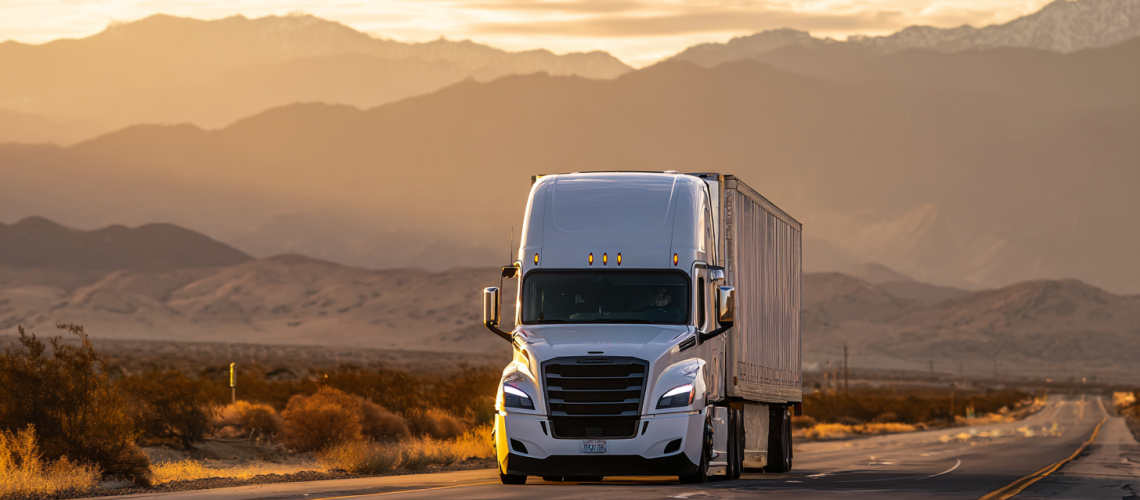
The California DMV has put autonomous heavy-duty trucks on a path toward full deployment on state roads — and fleet operators, shippers, and commercial carriers need to understand what that shift means before it reshapes how trucks are registered, insured, and titled in California.
This is not a distant hypothetical. The DMV has already released draft rulemaking, opened two public comment periods, and is moving autonomous commercial motor vehicle (CMV) regulations through its formal adoption process. The rules are coming. The question for anyone who operates commercial vehicles in California is how prepared they will be when those rules take effect.
What the California DMV Is Actually Proposing
California currently bans autonomous commercial vehicles weighing more than 10,001 pounds from operating on public roads. The DMV’s proposed regulations would lift that ban and create a structured permit pathway for testing and eventually deploying self-driving trucks in real freight operations.
Under the draft rules, autonomous CMVs from Class 3 through Class 8 would be eligible for operation on roads with speed limits of 50 mph or higher. In practical terms, that opens California’s major freight corridors — the I-5, Highway 99, I-10, and similar arterials — to hub-to-hub autonomous trucking runs between distribution centers and ports.
The permit framework would require manufacturers to submit safety cases, maintain incident reporting systems, and demonstrate compliance with updated standards rather than the current “disengagement report” model. It shifts regulatory focus from monitoring human driver interventions to verifying the autonomous system’s performance and accountability.
Why the “Operator” Question Is the One That Matters Most
For anyone managing commercial vehicles in California, the most consequential question the new rules must answer is deceptively simple: who is the operator?
In traditional trucking, the answer is obvious — there is a human driver, a carrier operating authority, and an owner of record. Those three entities are clearly established in DMV records, and liability for registration lapses, overweight violations, insurance gaps, and crashes flows logically from those relationships.
Autonomous trucks break that model. When a self-driving Class 8 tractor pulls a loaded trailer between Fresno and Los Angeles without a human behind the wheel, the “operator” could be the fleet that owns the tractor, the AV technology provider whose software is doing the driving, a third-party logistics company managing the load. Or some combination of all three.
California’s evolving AV regulatory framework will need to specify which party carries the registration, which party must maintain insurance, and which party is on the hook when something goes wrong. Those determinations will directly affect how autonomous CMVs are titled and registered at the DMV — and how quickly registration issues create operational problems for fleets.
The Registration and Title Complications Fleets Should Anticipate
Even before autonomous CMVs reach full commercial deployment, fleets and carriers operating on California routes should be thinking through several registration and title scenarios that the new rules are likely to create.
Multi-party ownership and operation. It is common today for a fleet to own a tractor outright. With autonomous trucks, the operating entity in DMV records may need to be the AV technology provider, a joint venture entity, or a leasing company with a separate licensing agreement — even if the fleet physically controls the vehicle day to day. Keeping titles and registration clean across ownership changes and configuration upgrades will require careful attention to DMV record accuracy.
Permit endorsements and new registration categories. The DMV’s proposed rules would create a distinct AV permit layer on top of standard commercial vehicle registration. There is a reasonable likelihood that California eventually establishes separate registration categories or endorsements for autonomous CMVs, similar to the way the state handles commercial vehicle weight certifications and IRP apportionment differently than standard passenger vehicles. Fleets that proactively understand these emerging categories will be better positioned than those scrambling to comply after the fact.
Transitions mid-fleet. Many carriers will not flip overnight from entirely human-driven fleets to entirely autonomous operations. The more realistic near-term scenario involves fleets running a mix of traditional and AV-equipped tractors on the same California routes. Managing registration records, weight declarations, and compliance documentation across a mixed fleet adds complexity that grows quickly without a reliable process in place. If you are currently working through commercial vehicle registration in California, it is worth starting to think about how your registration workflow will accommodate AV equipment designations in the future.
Insurance and Liability in a Self-Driving Freight World
Insurance is the other major pressure point that autonomous trucking creates for commercial operators.
Today, a fleet insures its vehicles and drivers. Coverage follows the standard structure: commercial auto liability, cargo coverage, physical damage. When there is an accident, liability investigation focuses on driver behavior, carrier maintenance records, and shipper loading practices.
With autonomous trucks, that structure shifts significantly. Legal and regulatory analysts tracking California’s AV policy have noted that questions of product liability — meaning the AV system’s design or software — will increasingly enter the picture alongside traditional carrier liability. Depending on how California’s final rules assign “operator” status, a fleet could find itself either more or less exposed to liability than it would be with human-driven trucks.
For registration purposes, the insurance implications are direct. California’s DMV requires proof of financial responsibility to register a commercial vehicle and can suspend registration when coverage lapses. If autonomous truck regulations require carriers to list both a fleet and an AV technology provider as responsible parties, managing insurance compliance and ensuring it is accurately reflected in DMV records becomes a two-entity coordination problem instead of a straightforward single-carrier task.
What Fleets and Carriers Should Do Right Now
The autonomous trucking regulations are still in the rulemaking phase, which means there is time to prepare rather than react. Here is what commercial operators running California routes should be thinking about today.
Audit your current registration records. The best foundation for navigating future regulatory changes is having clean, accurate records right now. Titles, registered owner information, weight declarations, and IRP apportionment data should all reflect your current fleet configuration. Errors that are minor inconveniences today can become significant problems when a regulatory change forces an update to every vehicle record in your fleet simultaneously.
Track the DMV rulemaking calendar. The California DMV’s formal rulemaking process includes public comment periods and notices of rulemaking action that are publicly accessible. Following the process gives you advance notice before final rules create compliance deadlines. The DMV’s rulemaking actions page is the authoritative place to monitor progress.
Understand how California’s emissions rules intersect with AV trucks. Autonomous trucks will still need to meet California’s commercial vehicle emissions standards, and the ongoing tension between federal policy and California’s truck emissions framework adds another layer of compliance complexity for interstate carriers. An AV-equipped tractor that does not meet California’s emissions requirements is not going to be easier to register just because it drives itself.
Build a relationship with a DMV services specialist now. The commercial vehicle registration process in California is already one of the most document-intensive and administratively complex in the country. Adding autonomous vehicle permit requirements, multi-party operator designations, and potential new registration categories will make it more so. Working with a team that monitors California DMV rulemaking and handles commercial registrations every day is the most practical way to stay ahead of changes rather than being caught by them.
Registering Trucks for a Self-Driving Future
Quick Auto Tags helps fleet operators, carriers, and commercial vehicle owners throughout California manage the full range of DMV registration requirements — from initial titling and weight certifications to IRP programs and registration renewals. Our fleet DMV services are built specifically for businesses that cannot afford delays, errors, or missed deadlines in their registration records.
As California’s autonomous truck regulations move toward finalization, we are tracking the rulemaking closely and will help our clients understand what new permit requirements, ownership designations, or registration categories mean for their specific fleet situations. Whether you are managing a single commercial tractor or a multi-vehicle California operation, having clean DMV records and a clear compliance process is the foundation you need before the rules change.
Contact Quick Auto Tags at (951) 409-9091 to discuss your commercial vehicle registration needs or learn how to prepare your fleet records for California’s autonomous trucking future.
This article provides general educational information about California DMV rulemaking in progress. It does not constitute legal or regulatory advice. Consult Quick Auto Tags or qualified legal counsel for guidance specific to your fleet and operations.
